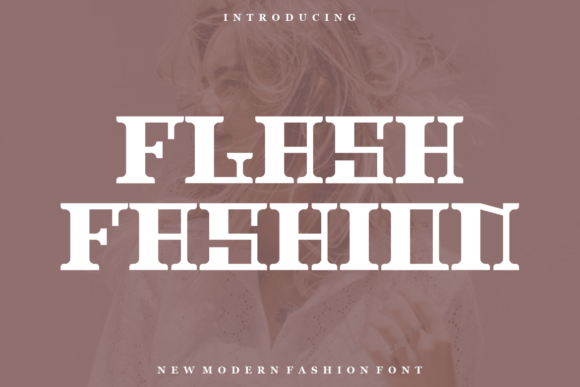
Flash Fashion Font: Bold Display Typography for Web
Selecting the right typeface is one of the most critical decisions in digital product design. As web designers and UI creators, we understand that typography does more than convey text; it establishes the emotional baseline of a user experience. Flash Fashion is a modern display font that brings a bold, authentic character to digital interfaces. Unlike generic system fonts, this typeface offers a distinct personality that can elevate landing pages, e-commerce banners, and brand identities from functional to memorable. Its geometric confidence makes it particularly effective for projects requiring immediate visual impact without sacrificing contemporary appeal.
Visual Hierarchy and Hero Section Performance
In web layout design, the hero section carries the heavy lifting of conversion. Users typically scan this area in milliseconds to determine relevance and trust. Flash Fashion excels here due to its substantial weight and clear letterforms. When used for primary headlines or value propositions, it creates an anchor point that guides the eye naturally through the page content. The font’s bold nature allows it to hold its own against busy background imagery or video overlays, ensuring that your core message remains legible even in dynamic environments.
For SaaS founders and digital marketers, this means higher engagement rates on key messaging. The authenticity of the letterforms avoids the sterile look of standard sans serif fonts while remaining cleaner than traditional script options. It strikes a balance between artistic expression and commercial clarity, making it ideal for:
- Primary Headlines: Large-scale text that communicates the main benefit of a product or service.
- Promotional Banners: High-contrast announcements for sales, launches, or events.
- Navigation Accents: Distinctive menu items or category labels in creative portfolios.
- Social Media Graphics: Shareable assets that maintain brand consistency across platforms.
Enhancing Brand Identity in Digital Spaces
Consistency builds trust, and Flash Fashion serves as a reliable cornerstone for cohesive online branding. For boutique stores, coaching websites, or creative agencies, the font acts as a visual signature. Because it is categorized as a display font, it should be treated as a specialized tool rather than a utility player. Use it to define the "voice" of the brand in prominent areas, then transition to more neutral typefaces for functional elements. This strategic restraint actually amplifies the font's impact, preventing visual fatigue while reinforcing brand recognition at every touchpoint.
The modern aesthetic of Flash Fashion aligns well with current web design trends that favor maximalist typography and expressive layouts. However, its structured geometry ensures it doesn't feel chaotic. This makes it suitable for esports branding, fashion editorials, and lifestyle blogs where energy and style are paramount. By integrating this typeface into your digital brand kit, you provide stakeholders with a versatile asset that works equally well on a mobile app splash screen and a desktop landing page header.
Strategic Font Pairing for Readability
A common pitfall when using bold display fonts is neglecting the supporting cast. Flash Fashion demands a partner that provides breathing room and facilitates long-form reading. As a rule of thumb, pair this typeface with a clean, neutral sans serif font for body copy. Fonts like Inter, Roboto, or Open Sans offer the necessary contrast to let Flash Fashion shine without competing for attention. The x-heights and widths should complement rather than match exactly; the goal is differentiation that creates rhythm.
For editorial-style websites or course sales pages, consider pairing Flash Fashion with a refined serif font for subheadings or pull quotes. This combination bridges the gap between modern boldness and traditional credibility, creating a sophisticated hierarchy that guides users through complex information. Avoid pairing it with other decorative or handwritten fonts, as this often leads to visual clutter and reduced accessibility. The strength of Flash Fashion lies in its ability to stand alone as the primary stylistic element within a minimalist typographic system.
Optimizing for Mobile and Responsive Layouts
Display fonts must be handled carefully in responsive environments. On smaller screens, bold letterforms can easily become overwhelming or illegible if not scaled correctly. When implementing Flash Fashion in CSS, utilize fluid typography units like clamp() to ensure smooth scaling between breakpoints. Test extensively on actual devices to verify that tight counters remain open and that stroke weights do not bleed together on low-resolution displays.
Accessibility should never be an afterthought. Ensure sufficient color contrast ratios when placing this font over images or colored backgrounds. While the font is bold, adding a subtle text shadow or semi-transparent overlay behind the text can significantly improve readability on variable photography. Additionally, limit the use of all-caps settings to short phrases or buttons; extended uppercase passages in display fonts reduce scanning speed and comprehension. Reserve title case or sentence case for longer headings to maintain optimal legibility.
Technical Considerations and Licensing
Before deploying Flash Fashion to a live production environment, verify the technical specifications and licensing terms. Check whether the download includes webfont formats (WOFF2) for optimal loading performance and broad browser support. Modern web performance relies heavily on efficient font delivery, so subsetting the font to include only the characters needed for your specific language requirements can drastically reduce file size and prevent layout shifts.
Licensing is equally important for professional web designers and agency teams. Ensure your license covers the intended usage, whether that involves client websites, digital templates, or embedded app interfaces. Commercial font licensing protects both the designer and the end-client from legal issues down the line. Many premium font licenses differentiate between desktop use (for mockups and static design) and web use (for live sites). Always review the EULA to confirm that your project scope aligns with the permitted usage tiers, especially for high-traffic e-commerce stores or SaaS products where impression-based licensing may apply.
Practical Application Examples
To visualize how Flash Fashion integrates into real-world workflows, consider these specific digital scenarios:
- Creative Portfolio: Use massive, overlapping type treatments for project titles to showcase artistic direction, paired with small, utilitarian metadata in a mono-spaced font.
- E-Commerce Product Page: Apply the font to the product name and price to create shelf appeal, while keeping descriptions and specs in a highly readable sans serif.
- Event Landing Page: Leverage the bold weight for countdown timers and venue details to generate urgency and excitement above the fold.
- Digital Course Platform: Use it for module headers and certification badges to add a sense of prestige and accomplishment to the learning interface.
By treating Flash Fashion as a strategic design component rather than mere decoration, web designers can craft digital experiences that are not only visually striking but also functionally superior. The intersection of bold aesthetics and thoughtful usability is where true conversion-focused design lives. Whether you are refreshing an existing brand identity or building a new digital product from scratch, this typeface offers the versatility and presence needed to make a lasting impression in a crowded online landscape.